The Future of Influencer Marketing Is Not Ads. It Is Products.
September 2024 · 9 min read

The future of influencer marketing products is not another round of sponsored posts with bigger checks. US creator economy ad spend is projected to reach $43.9 billion by 2026, according to Statista and Goldman Sachs Research estimates. The influencer marketing industry has grown from a niche experiment into a cornerstone of modern advertising. But something more fundamental is shifting beneath the surface of all that spending.
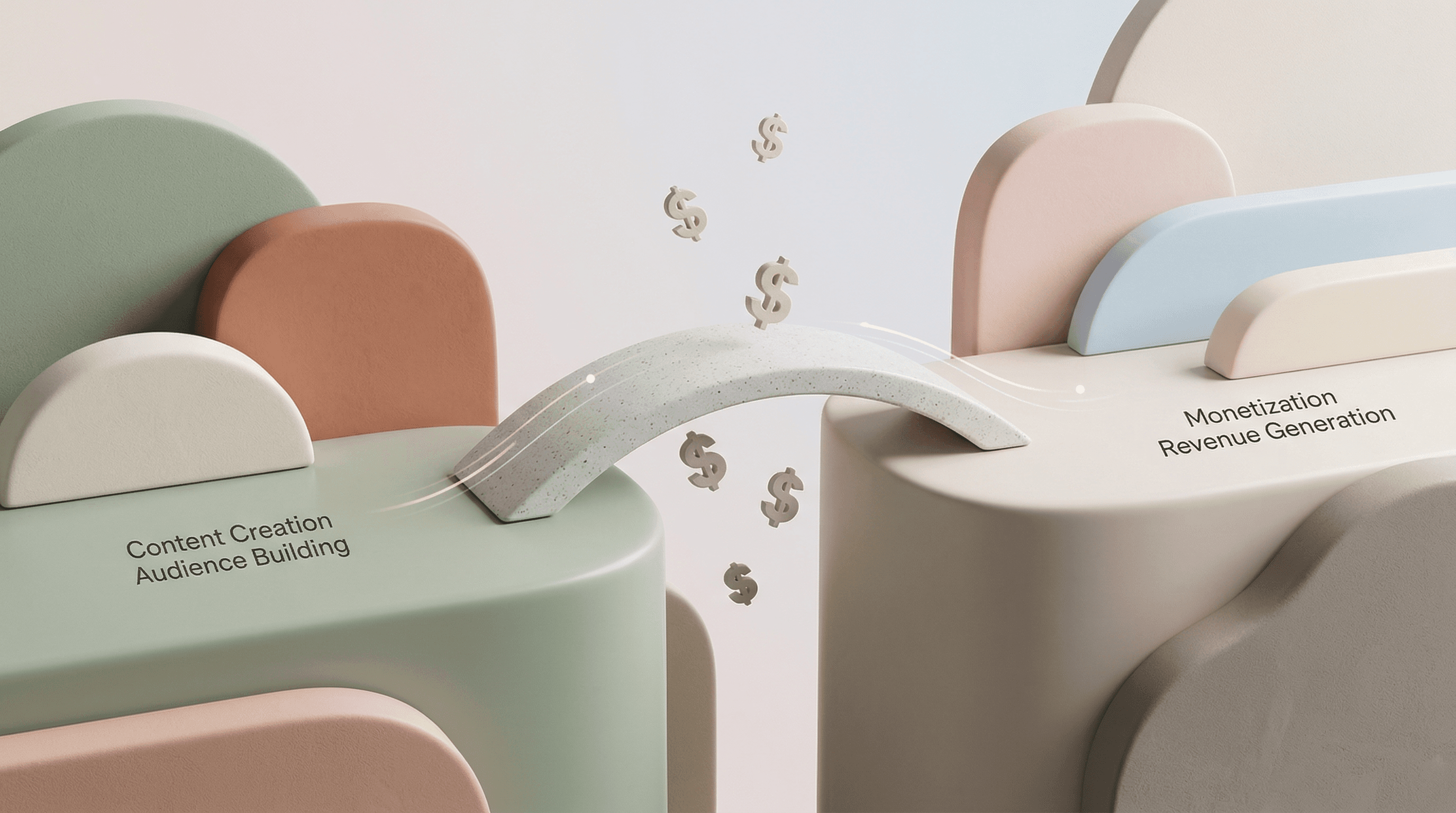
The next evolution of influencer marketing is not bigger sponsorship checks or more sophisticated affiliate programs. It is creators owning the products they promote. The era of the creator as a billboard is ending. The era of the creator as a founder is beginning.
This shift is not theoretical. It is already happening, and it is accelerating. The creators who recognize it early will build the most valuable businesses in the next decade. Those who do not will find themselves competing for a shrinking share of sponsorship budgets.
The Sponsorship Model Is Maturing
Traditional sponsorships have become commoditized. Brands now use sophisticated calculators for CPM (cost per mille), engagement rate, and expected ROI. The guesswork that once allowed creators to command premium rates has been replaced by data-driven pricing models that compress margins.
According to a 2024 Influencer Marketing Hub benchmark report, average sponsorship rates for mid-tier creators (100K to 500K followers) have declined 15% to 25% in real terms over the past three years as more creators enter the market and compete for the same brand budgets. A sponsored post that paid $10,000 three years ago might pay $6,000 to $7,500 today.
The sponsorship model is not dying. It is plateauing. And for ambitious creators, a plateau is a signal to find the next growth lever. The question is no longer "how do I get more brand deals?" It is "what can I build that I own?"
The Product Ownership Shift
The economics of promotion versus ownership tell the entire story. When a creator promotes someone else's product in a sponsored post, they earn a flat fee or a small percentage of sales for a limited window. The relationship with the customer belongs to the brand. The data belongs to the brand. The recurring revenue belongs to the brand.
When a creator owns the product, everything inverts. They earn revenue from every customer, every month, for as long as the product exists. The customer relationship belongs to the creator. The brand equity accrues to the creator. The compounding revenue accrues to the creator.
The examples are becoming impossible to ignore. MrBeast's Feastables generated an estimated $500 million in revenue within its first two years, according to reporting by Bloomberg and Forbes. Huda Kattan turned her beauty content audience into Huda Beauty, a brand valued at over $1 billion. Prime, co-founded by Logan Paul and KSI, reached $1.2 billion in retail sales in its first full year according to industry tracking by Beverage Digest. These are not sponsorship payouts. These are ownership stakes in businesses built on creator audiences.
From Promoting to Owning
The shift is both psychological and economic. Promoting someone else's product makes you a channel. Owning a product makes you a business. The content changes too. When you own the product, your content becomes a genuine expression of something you built rather than a scripted endorsement. Audiences can tell the difference, and they respond to authenticity.
Creators who own products talk about them differently. The passion is real. The knowledge is deep. The investment is personal. This authenticity drives higher conversion rates, stronger customer loyalty, and organic word-of-mouth that no sponsored post can replicate.
The transition is not instant. Most creators start by promoting other products, learning what resonates with their audience, and gradually identifying the gap between what exists and what their audience actually needs. That gap is the product opportunity. The creators who see it and act on it are the ones who make the leap from channel to business.
Brands Are Co-Investing, Not Just Sponsoring
Forward-looking brands are recognizing this shift and adapting. Instead of paying for one-off mentions, some are co-investing with creators to build products together. This takes various forms: providing capital for product development, offering manufacturing and distribution infrastructure, or contributing technical expertise.
The brand gets authentic promotion from a trusted voice with genuine ownership in the product. The creator gets resources to build something they own. Both parties benefit from a longer-term, deeper relationship than a sponsored post could ever provide. This co-investment model is still in its early stages, but the brands and creators who adopt it early are building competitive advantages that will be difficult to replicate. For a detailed look at how these partnerships are structured, read our article on how SaaS companies are partnering with influencers.
The Economics of Ownership: The Future of Influencer Marketing Products
The financial case is concrete. Consider a creator with 500,000 followers. Through sponsorships, they might earn $5,000 to $20,000 per sponsored post. With four to eight sponsored posts per month, that is $20,000 to $160,000 per month at the high end. That revenue requires continuous negotiation, content production, and relationship management. Stop producing, and the income stops.
Now consider the same creator with a SaaS product that serves their audience. At $29 per month with 2,000 subscribers, that is $58,000 per month in recurring revenue with 80% or higher margins. At 5,000 subscribers, it reaches $145,000 per month. The revenue does not require new sponsorship deals. It does not fluctuate with brand budgets. It compounds as the subscriber base grows.
BuildVentureLab helps creators capture exactly this kind of leverage. The creator brings the audience and the domain expertise. BuildVentureLab handles the product development, design, and engineering. The result is a product business that generates recurring revenue independent of sponsorship cycles, platform algorithms, or brand budget decisions.
The comparison between promotion income and ownership income becomes more dramatic over time. Sponsorship revenue resets to zero every month. You earn only what you negotiate and produce that month. Product revenue accumulates. A SaaS product with 90% annual retention grows its revenue base every month as new subscribers are added faster than existing ones leave. After two years, the creator with a product business is earning multiples of what their sponsorship-only peers generate, with less effort per dollar earned.
What This Means for the Industry
If the trend continues, and every signal suggests it will, the influencer marketing industry will bifurcate into two distinct tiers:
- Tier 1: Promotion creators. They continue to rent their attention to brands through sponsorships. They earn good livings, but their income is linear: more content for more pay. When they stop creating, the revenue stops.
- Tier 2: Product creators. They own the products their audiences use. Their income is exponential: compounding revenue from growing product businesses. The revenue continues whether they post this week or not.
The next billion-dollar creator businesses will not be built on sponsorship revenue. They will be built on owned products. The transition from Tier 1 to Tier 2 is not easy, but for those who make it, the economics are transformational. For a deeper look at why most creators are leaving significant revenue on the table, read our analysis of the audience monetization gap in the creator economy.
The future of influencer marketing is not more ads. It is more products. The creators who recognize this shift early and position themselves as product owners rather than promotional channels will build the most enduring and valuable businesses in the creator economy.
The transition requires a fundamental shift in mindset. It means thinking like a founder, not just a content creator. It means viewing your audience as potential customers, not just followers. And it means investing the time to build something you own rather than renting your attention to someone else's brand. The question is not whether this shift will happen. It is whether you will be on the right side of it when it does.
Built by the team behind a $1B+ SaaS portfolio
Over the past decade, our 90+ person team has launched and scaled SaaS products across every vertical, generating over $1B in company-wide revenue. Now we partner with creators and manage every aspect of the product, from build through ongoing growth. You bring the distribution. We bring everything else.
Apply for a Partnership