
The Audience Monetization Gap: Why Most Creators Leave Money on the Table
April 2025 · 7 min read
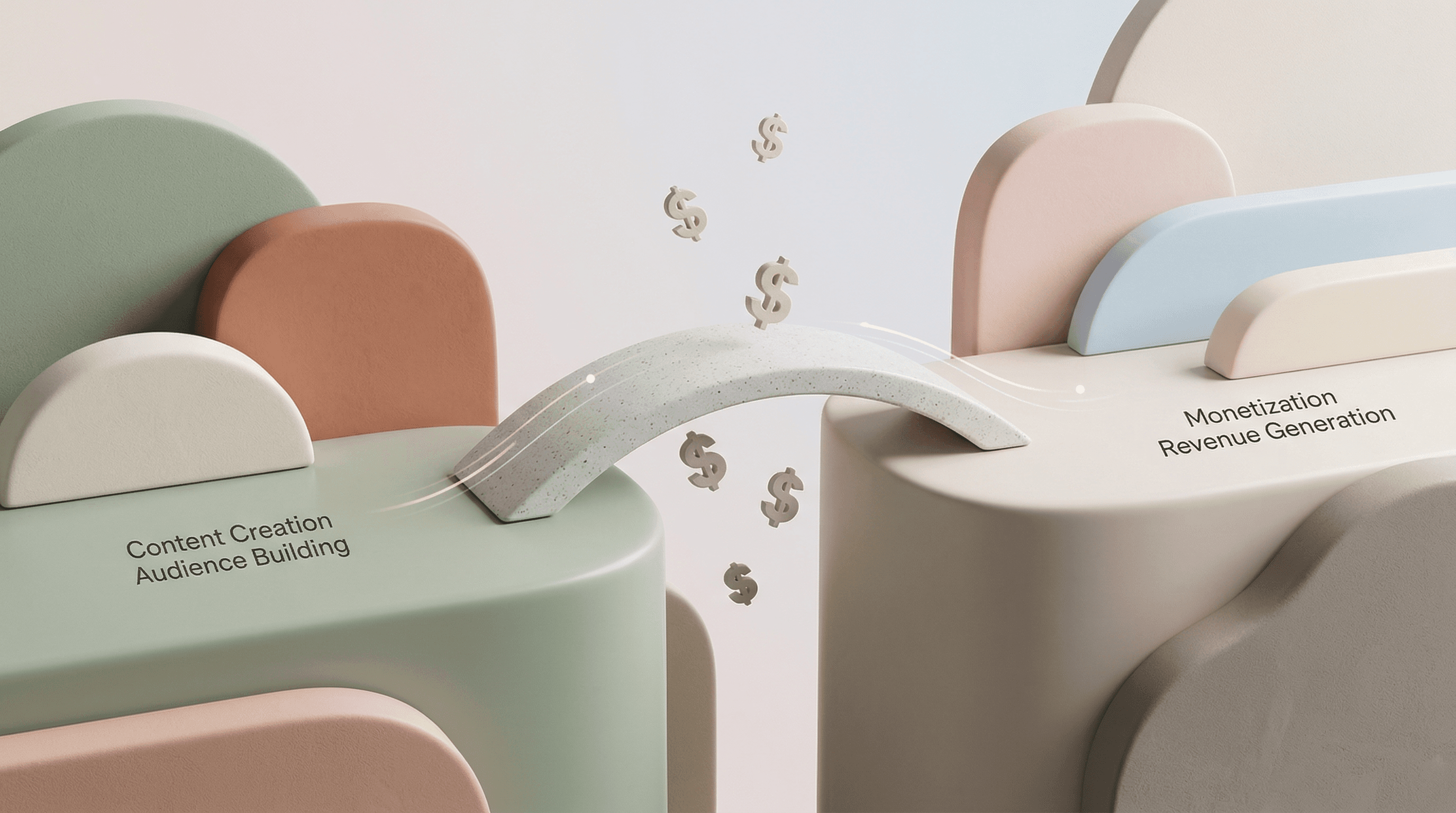
The creator economy is valued at over $250 billion, according to a 2024 Goldman Sachs research report. More than 200 million people worldwide consider themselves creators, based on data from SignalFire's creator economy market map. Those numbers sound like a gold rush. The reality is something very different.
The audience monetization gap is the distance between what a creator's audience is actually worth and what the creator earns from it. For the vast majority, that gap is enormous. Only 4% of creators earn over $100,000 per year, according to Linktree's 2023 Creator Report. The majority earn less than $15,000 annually. Nearly half earn under $500. Something is structurally broken, and it is not a lack of talent or effort.
The Audience Monetization Gap by the Numbers
The income distribution in the creator economy is steeper than almost any traditional industry. Linktree's data breaks it down starkly. The top 4% earn six figures or more. A thin middle tier earns between $50,000 and $100,000. The vast majority sit in the long tail, earning amounts that would not qualify as a living wage in most developed countries.
Goldman Sachs projects the creator economy will reach $480 billion by 2027, but that growth is not lifting all boats equally. The wealth concentration is intensifying. The top creators attract more brand deals, more platform perks, and more algorithmic favor, while everyone else fights over diminishing scraps. This is not an accident. It is the predictable result of a system built on attention economics, where winner-takes-most dynamics dominate.
Why the Numbers Look This Way
Three structural factors drive the monetization gap.
- Over-reliance on platform payouts. Ad revenue sharing through YouTube, TikTok, and Twitter/X pays a tiny fraction of the audience's actual commercial value. YouTube's Partner Program is the most generous, but even there, CPMs vary wildly and most creators earn far less than their content drives in advertiser value.
- Lack of business infrastructure. Most creators are solo operators. They do not have the skills, systems, or team to build revenue streams beyond content itself. They are talented entertainers, educators, or storytellers, but they have never been taught how to build a business.
- Insufficient diversification. Creators who depend on a single income stream are one algorithm change, one platform policy update, or one content slump away from losing everything. And the majority depend on exactly one stream.
Diversification Is the Cure
The data on diversification is clear. According to ConvertKit's 2024 State of the Creator Economy report, creators with three or more income streams earn an average of $75,000 more per year than creators relying on a single revenue source. The top earners in the creator economy typically maintain seven or more revenue streams, including sponsorships, affiliate income, digital products, merchandise, memberships, consulting, and owned software.
This is not about working harder. It is about building smarter. A single sponsorship deal can vanish overnight. A product you own generates revenue whether or not any brand decides to partner with you this month. For a detailed framework on building multiple revenue streams, read our article on the revenue diversification strategy every creator needs.
Software as the Highest-Leverage Stream
Among all available revenue streams, SaaS products offer the highest leverage. Recurring revenue means predictable income. High margins, typically 70% to 90% for software according to Bessemer Venture Partners' cloud benchmarks, mean more profit per dollar of revenue. No physical inventory, no shipping logistics, no perishable goods.
And the product continues earning whether the creator posts today or not. Compare the economics directly. A creator selling a $29 per month software product to 1,000 users generates $29,000 per month in recurring revenue. That same creator would need millions of views per month to match that through platform ad payouts alone. The leverage difference is enormous.
Why Most Creators Have Not Built Software Yet
The barrier is not demand. Creators hear from their audiences every day about problems that software could solve. The barrier is execution. Building software requires product management, design, engineering, quality assurance, customer support, and ongoing maintenance. Most creators do not have these skills and cannot afford to hire a full development team.
This is exactly the gap that partnerships like those offered through BuildVentureLab are designed to fill. The creator brings the audience and domain expertise. The partner brings the technical execution. The creator does not need to learn to code or manage a dev team. They need to keep doing what they already do well while a dedicated product team handles the rest.
Closing the Gap
The audience monetization gap does not close by posting more content. It does not close by chasing higher CPMs or negotiating bigger sponsorship checks. It closes by building products that capture the actual value of an engaged audience.
Every creator with a dedicated following has an asset worth far more than ad impressions. The question is whether they are extracting that value or leaving it on the table. For a practical guide on identifying and testing the right product idea, read our article on how to validate a product idea using your existing audience.
The creator economy is still young. The infrastructure is being built right now. Creators who move early toward product ownership will be the ones who close the monetization gap for themselves. And in doing so, they will reshape the economics of what it means to be a creator for everyone who follows.
Built by the team behind a $1B+ SaaS portfolio
Over the past decade, our 90+ person team has launched and scaled SaaS products across every vertical, generating over $1B in company-wide revenue. Now we partner with creators and manage every aspect of the product, from build through ongoing growth. You bring the distribution. We bring everything else.
Apply for a Partnership