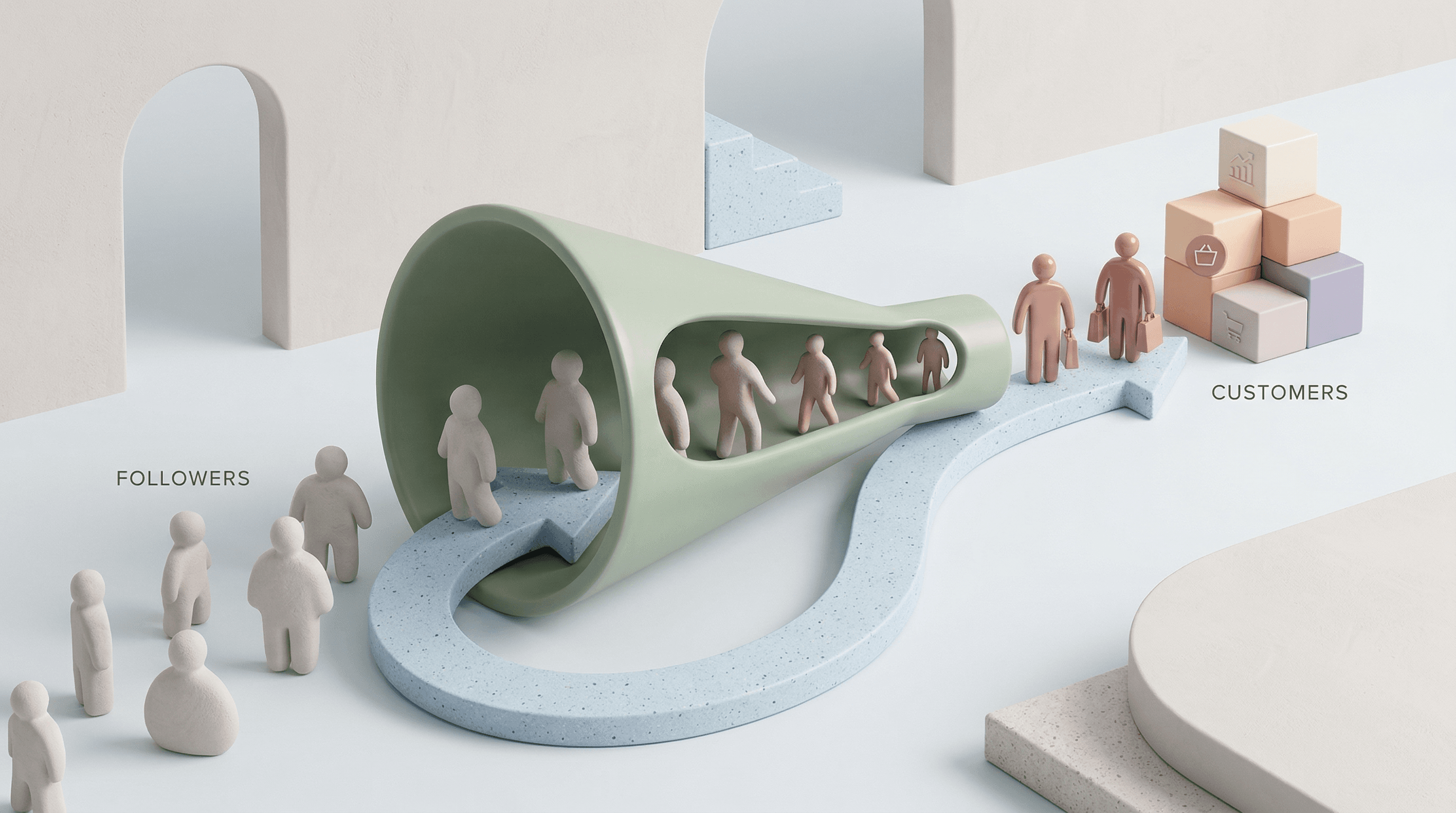
How to Monetize a YouTube Channel Beyond AdSense
December 2025 · 8 min read

There are over 61 million YouTube channels competing for attention right now. Fewer than 4% of them earn $100,000 or more per year. If you are relying solely on AdSense to build wealth as a creator, you are playing a game where the odds are stacked against you. The good news: the most successful YouTubers figured this out years ago, and the playbook they use is more accessible than you think.
The AdSense Reality Check
Let us start with an honest look at what AdSense actually pays. The global median CPM sits at $2.91 per 1,000 ad impressions. U.S. creators see higher averages around $15, but YouTube takes 45% of all ad revenue before you see a dollar. After that cut, creators typically earn an RPM of $4 to $8 per 1,000 views.
What does that mean in practice? To earn $50,000 per year from AdSense alone, you need roughly 6 to 12 million views annually, depending on your niche. Finance and tech creators might get there with fewer views thanks to higher CPMs ($10 to $30). Gaming and entertainment creators often need significantly more because their CPMs sit between $1 and $5.
Then there is seasonality. CPMs spike in Q4 as advertisers chase holiday shoppers, then crash in Q1 when budgets reset. A creator earning $6,000 in December might see $2,500 in January with the exact same view count. This volatility makes it nearly impossible to plan your finances, hire help, or invest in growth.
AdSense is not worthless. But treating it as your primary income strategy is like trying to fill a swimming pool with a garden hose. You can do it. It will just take forever.
Sponsorships and Brand Deals
The most common first step beyond AdSense is brand partnerships. Sponsors pay creators to feature their products in videos, and the rates can be substantial. A creator with 100,000 subscribers might charge $2,000 to $5,000 per integration. Creators with 1 million+ subscribers can command $20,000 to $100,000+ per deal.
Brand deals remain the largest income source for creators overall, accounting for roughly 70% of total creator income across platforms. But they come with real limitations. Revenue is inconsistent because it depends on brand budgets, which fluctuate with the economy. Each deal requires negotiation, scripting, and approval cycles. And there is a ceiling: you can only feature so many sponsors per video before your audience tunes out.
Sponsorships are worth pursuing, but they scale linearly with effort. More deals means more work, not more leverage.
Digital Products
Courses, templates, presets, ebooks, and other digital products offer a meaningful step up from ad revenue. Once created, a digital product can sell indefinitely with minimal ongoing effort. A $49 course that sells 100 copies per month generates $4,900 per month, and the margins are excellent because there is no physical inventory.
The limitation is that most digital products are one-time purchases. A customer buys your course once and you need to find a new customer to replace that revenue. There is no compounding effect. You are constantly filling a bucket that leaks.
That said, digital products are a great way to prove that your audience will pay for something. If 500 people buy your $49 course in the first month, that is a strong signal that a subscription product could work too.
Memberships and Community
YouTube Memberships, Patreon, and paid Discord servers introduce recurring revenue at a small scale. Fans pay $5 to $25 per month for exclusive content, early access, or direct interaction with you. This is genuinely recurring, which is a structural improvement over one-time purchases.
The challenge is scale. Most YouTube Membership programs generate modest income because the value proposition (emojis, badges, occasional bonus content) does not justify high price points. Patreon creators face similar ceiling issues. The median Patreon creator earns far less than you would guess from the platform's success stories.
Memberships are a good stepping stone. They teach you about retention, churn, and delivering ongoing value. But they are rarely a wealth-building engine on their own.
Physical Products and Merch
Merchandise and physical products are the most visible form of creator commerce. T-shirts, hoodies, mugs, and branded goods are everywhere. Some creators go bigger: MrBeast built Feastables into a $250 million revenue brand. Logan Paul and KSI launched Prime Hydration to $1.3 billion in peak sales.
But physical products come with physical problems. Manufacturing costs, inventory risk, shipping logistics, customer service, and returns all eat into margins. A typical merch line operates at 20% to 40% margins. A CPG brand like Feastables runs at roughly 8% net margins despite massive scale. Prime Hydration saw sales drop 76% from peak, proving that even billion-dollar creator products can decline rapidly.
Physical products work best at massive scale or for creators who genuinely want to build a consumer brand. For most YouTubers, the complexity outweighs the reward.
Software Products
This is the revenue stream most creators overlook, and it is arguably the most powerful. A software product (a SaaS tool, app, or platform) offers 80%+ gross margins, monthly recurring revenue, and scales without proportional cost increases. No inventory. No shipping. No manufacturing.
The math is compelling. If 2,000 of your subscribers pay $19 per month for a software tool you co-created, that is $38,000 per month in MRR. That is $456,000 per year from a fraction of your audience. And unlike ad revenue, this number compounds as you retain existing customers and add new ones.
You do not need to be a developer to do this. The creator-plus-technical-partner model is becoming standard. You bring the audience and the domain expertise. A company like BuildVentureLab brings the product design, engineering, and operational infrastructure. You hold equity in a real business, not just a sponsorship deal.
For a deeper comparison of how recurring software revenue stacks up against ads, read our article on recurring revenue versus ad revenue for creators.
Comparing the Math
Let us put all six revenue streams side by side for a creator with 200,000 subscribers:
- AdSense (500K monthly views, $6 RPM): $3,000/month. Margins: ~100% but volatile. Requires constant content.
- Sponsorships (2 deals/month at $3,000): $6,000/month. Margins: ~90%. Requires negotiation and fulfillment.
- Digital Products (course at $49, 80 sales/month): $3,920/month. Margins: ~90%. One-time purchases, no compounding.
- Memberships (300 members at $10/month): $3,000/month. Margins: ~85%. Recurring but limited scale.
- Merch ($8,000/month gross, 30% margin): $2,400/month net. Requires inventory, shipping, and customer service.
- Software (1,000 users at $19/month): $19,000/month. Margins: 80%+. Recurring, compounding, and scalable.
Software wins on nearly every metric except ease of starting. It requires more upfront investment and a technical partner. But the long-term economics are not close. As we covered in why creators are building software companies, the structural advantages compound over time, and creators who start building now will have a significant head start.
AdSense is fine as one revenue stream among many. It should never be your only one. The creators building real wealth are the ones who treat their channel as distribution for a business, not as the business itself. Your audience is watching. The question is whether you are giving them something worth paying for beyond the next video.
Built by the team behind a $1B+ SaaS portfolio
Over the past decade, our 90+ person team has launched and scaled SaaS products across every vertical, generating over $1B in company-wide revenue. Now we partner with creators and manage every aspect of the product, from build through ongoing growth. You bring the distribution. We bring everything else.
Apply for a Partnership