Email Lists vs. Social Followers: Which Drives Better Product Launches?
December 2023 · 7 min read

The average email open rate sits between 20% and 25%. Instagram organic reach hovers around 5% to 10% of followers. Facebook organic reach is under 5%. When you post on social media, most of your audience never sees it. When you send an email, the vast majority of your list receives it in their inbox. For product launches, this gap in reach is the difference between a modest debut and a blockbuster one. Understanding email list vs social followers for product launches is essential for any creator planning to ship a product.
The Reach vs. Conversion Divide
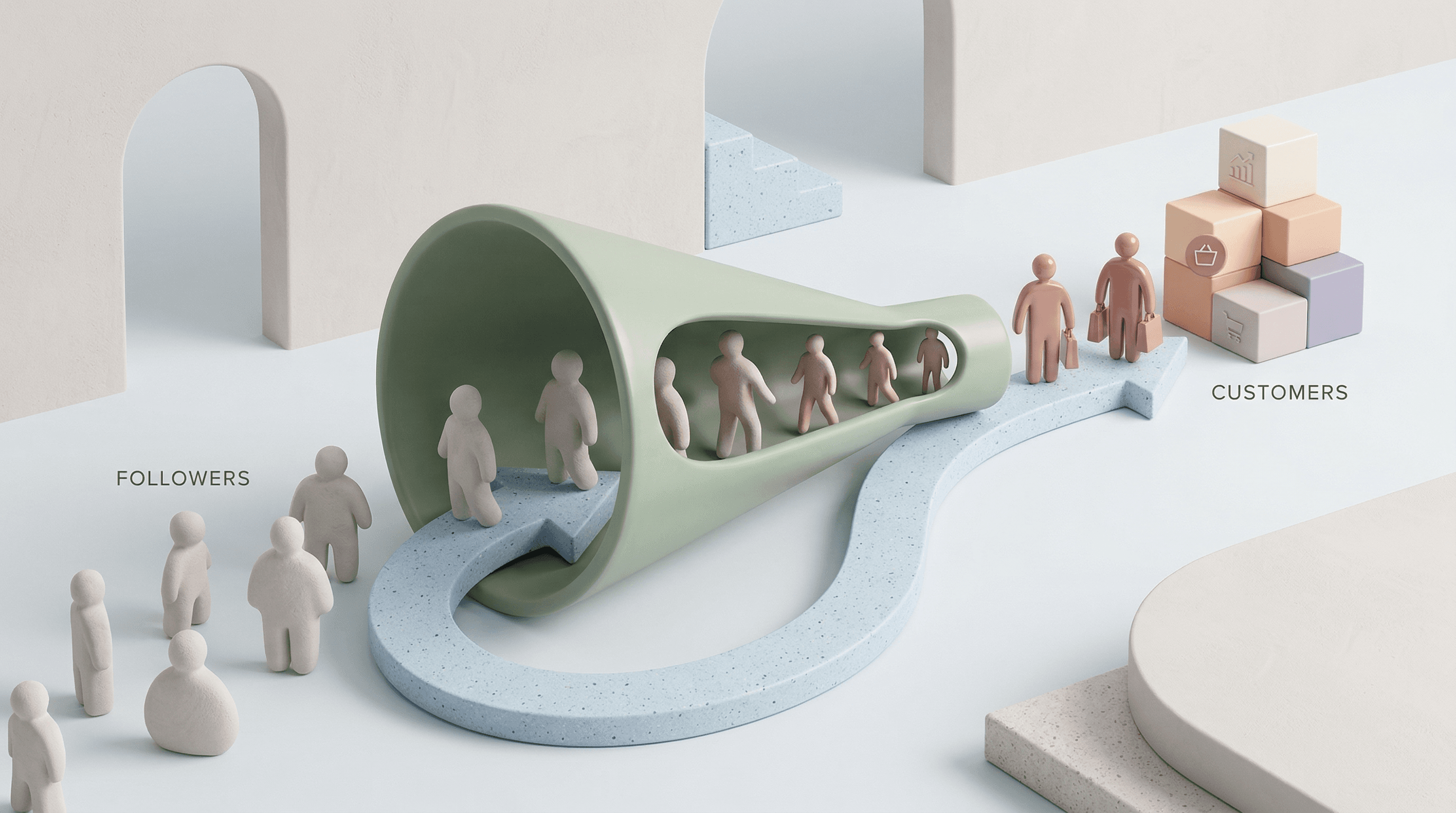
Social media excels at top of funnel awareness. It introduces your content, your brand, and your personality to new people. The algorithms are designed to surface content to broad audiences, making social platforms ideal for discovery and reach.
Email excels at bottom of funnel conversion. It reaches people who have already expressed interest and opted in to hear from you directly. These are not passive scrollers. They are engaged audience members who took a deliberate action to stay connected.
The two channels serve fundamentally different purposes. Treating them as interchangeable is one of the most common mistakes creators make when launching products. A social post generates awareness. An email generates sales. Both matter, but confusing their roles leads to disappointing results on both fronts.
There is an ownership distinction that matters even more. Social followers are borrowed. They exist on a platform you do not control. Algorithm changes, account suspensions, or platform policy shifts can reduce your reach overnight. Email subscribers are owned. They exist on a list you control entirely. No algorithm stands between you and your audience.
Why Email Wins for Product Launches
The numbers tell a clear story. Email consistently delivers 20% to 25% open rates for well maintained lists, compared to single digit organic reach on most social platforms. A creator with 10,000 email subscribers can expect 2,000 to 2,500 people to see their launch announcement. The same creator with 10,000 Instagram followers might reach 500 to 1,000 of them organically.
Direct inbox placement is a structural advantage. An email sits in the recipient's inbox until they act on it. A social post disappears from the feed within hours, buried under newer content from hundreds of other accounts. The shelf life of an email is measured in days. The shelf life of a social post is measured in minutes.
No algorithm dependency means predictable reach. Email delivery does not depend on an algorithm deciding whether your content is worthy of distribution. If the email is delivered, the recipient sees it. This predictability is invaluable for launch planning. You can forecast your reach with confidence rather than hoping the algorithm cooperates on launch day.
Segmentation capability adds another layer of power. Email allows you to segment your audience by interest, behavior, engagement level, and purchase history. This means you can tailor your launch messaging to different audience segments, dramatically improving conversion rates. A one size fits all social post cannot compete with a personalized email that speaks directly to each segment's specific interests.
The ROI numbers are staggering. Email marketing generates an average return of $36 to $42 for every $1 spent, according to research from Litmus and the Data and Marketing Association. This makes email the highest ROI digital marketing channel by a significant margin. No social platform comes close to matching this efficiency for direct conversion. For more on building diverse revenue channels as a creator, read our guide on creator revenue diversification strategy.
Building an Email List from Social
The smartest creators treat social media as a funnel into their email list. Every follower is a potential subscriber. The goal is to convert as many as possible from borrowed audience to owned audience.
Lead magnets are the most proven method. Offer a free resource, such as a template, guide, checklist, or calculator, in exchange for an email address. Promote the lead magnet in your content consistently. According to OptinMonster, well designed lead magnets convert between 3% and 10% of page visitors into email subscribers.
Newsletter signups work when positioned correctly. Do not just say "sign up for my newsletter." Position it as exclusive content that goes deeper than your social posts. Give people a specific reason to subscribe: early access, behind the scenes insights, detailed analysis that does not fit in a social post.
Waitlists serve double duty. Before launching a product, create a waitlist landing page. This simultaneously builds your email list and validates demand. Every signup is both a potential customer and a data point confirming market interest. Content upgrades within blog posts or YouTube video descriptions offer bonus content accessible only via email signup, capturing highly engaged audience members at the moment of peak interest.
The key is to treat email list building as an ongoing strategic priority, not an afterthought. Every piece of social content should include a path to your email list.
The Ideal Launch Strategy
The most successful creator product launches combine both channels, each playing to its strengths. Social for awareness, email for conversion. The two channels work together to create a launch that reaches broadly and converts deeply.
The launch sequence follows a proven pattern. Two weeks before launch, begin teaser content on social media. Build curiosity and drive people to your email list or waitlist. One week before, send an email to your list announcing early access details. On launch day, go public on social media with the full announcement. Simultaneously, send a conversion focused email with direct purchase links, launch pricing, and a clear call to action.
In the week following launch, continue the email sequence with follow up messages addressing common questions, sharing early user testimonials, and creating urgency around any limited time offers. Social media supports this with user generated content, behind the scenes posts, and celebration of milestones. For a deeper dive into validating your product idea before going all in on a launch, read our guide on how to validate a product idea with your audience.
Social media is the top of the funnel. Email is where the sales happen. The most successful creator product launches use both channels strategically, each playing to its strengths. If you are building a product and you do not have an email list, start building one today. Your social following gives you reach. Your email list gives you revenue. BuildVentureLab helps creators build launch strategies that leverage both channels for maximum impact, because getting the product right is only half the equation. Getting the launch right is the other half.
Built by the team behind a $1B+ SaaS portfolio
Over the past decade, our 90+ person team has launched and scaled SaaS products across every vertical, generating over $1B in company-wide revenue. Now we partner with creators and manage every aspect of the product, from build through ongoing growth. You bring the distribution. We bring everything else.
Apply for a Partnership