
Five Reasons Creator Product Launches Fail (and How to Avoid Them)
October 2024 · 8 min read
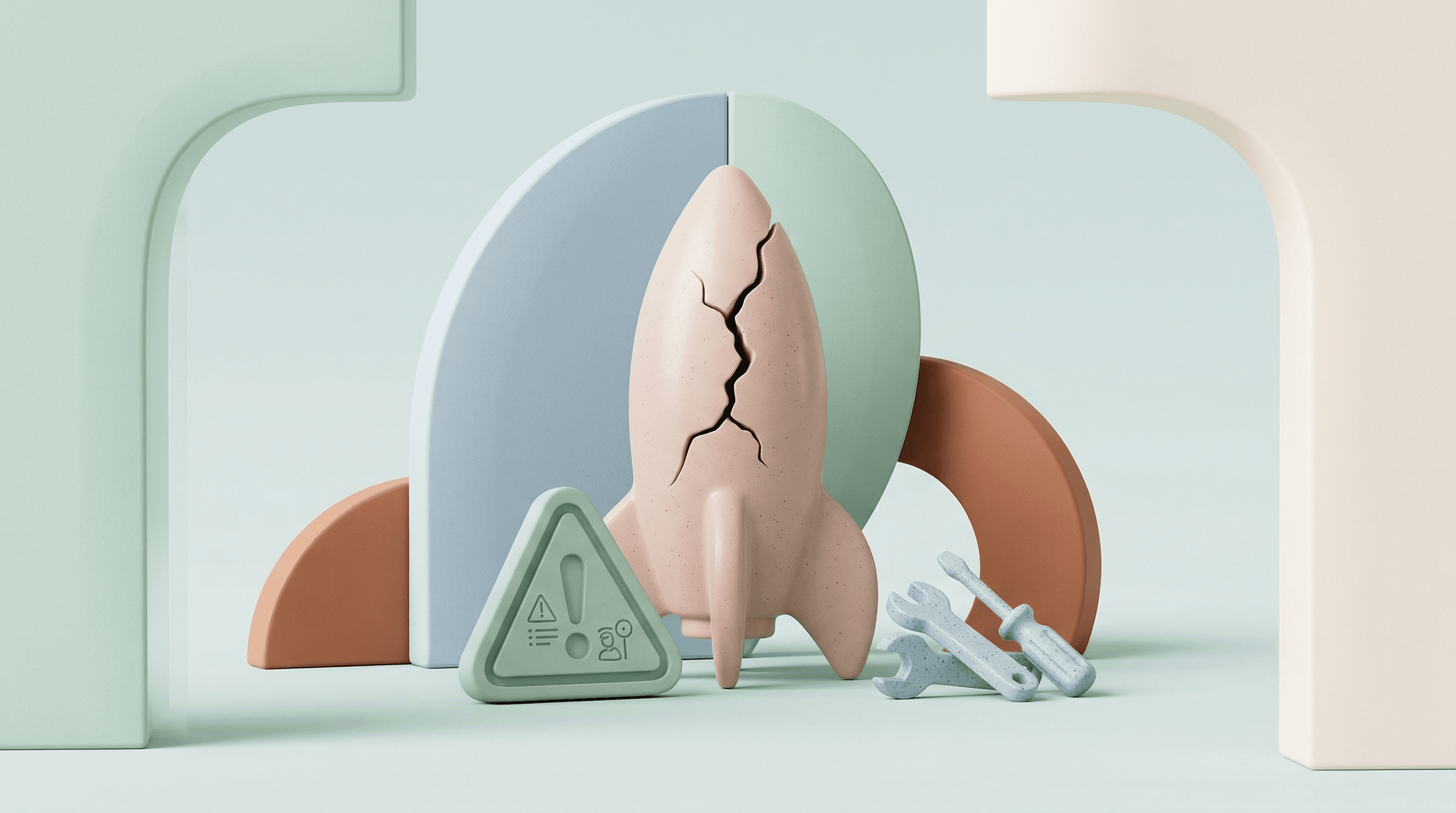
The creator economy has seen a surge in product launches over the past three years. Courses, apps, software tools, communities, and physical products are being launched by creators at an unprecedented rate. And a troubling number of them disappear within 12 months. According to industry analyses by CB Insights and creator economy research from SignalFire, roughly 70% to 80% of new digital products fail to gain meaningful traction in their first year. Creator product launch failure is not a reflection of ambition or talent. It is a pattern with identifiable, preventable causes.
After studying dozens of creator product launches, both successful and failed, five patterns emerge consistently among the ones that do not survive. The good news: every one of these failure modes is avoidable if you know what to look for.
Reason 1: Building What You Want Instead of What Your Audience Needs
This is the most common and most devastating mistake. A creator gets excited about an idea that they personally find interesting and assumes their audience will feel the same way. They skip validation entirely. They build for months. They launch to silence.
The product solves a problem the audience does not have, or solves it in a way that does not match how the audience actually works. The enthusiasm that drove the build phase collides with the indifference of the market. It is painful, expensive, and almost always preventable.
The fix: validate before you build. Talk to your audience directly. Run polls. Collect waitlist signups. Test the concept with a landing page before writing a single line of code. A weekend of validation can save months of wasted development. For a practical, step-by-step approach to audience validation, read our guide on how to validate a product idea using your existing audience.
Reason 2: Underestimating Operational Complexity
Building the product is the exciting part. Running it is the hard part. Customer support tickets start arriving on day one. Billing disputes need resolution. Bugs need fixing within hours, not weeks. Server infrastructure needs monitoring. Security vulnerabilities need patching.
Most creators have never run an operational business before. The daily grind of product operations can overwhelm even the most energetic founder. According to a 2024 SaaStr survey of SaaS founders, early-stage founders spend an average of 60% to 70% of their time on operations (support, billing, infrastructure, bug fixes) rather than on product development or growth. For a solo creator trying to maintain their content schedule on top of those operational demands, the math simply does not work.
The operational burden only grows over time. As the user base expands, so do the support tickets, the infrastructure demands, and the complexity of billing, compliance, and data security. A creator who struggles with 100 users will be overwhelmed by 1,000. The operational foundation needs to be solid from day one, and that means having a team or partner that specializes in running software businesses.
The fix: do not try to handle operations alone. Partner with a team that has the infrastructure and expertise to manage the operational side while you focus on your audience and content.
Reason 3: Launching Without a Distribution Plan
Some creators assume that having an audience automatically means having distribution. It does not. An audience that follows your content is not the same as a customer base that is primed to buy. Launching a product requires a deliberate strategy:
- Pre-launch hype building over two to four weeks
- A launch week content calendar with daily touchpoints
- Email sequences for waitlist subscribers and existing followers
- Cross-promotion with other creators in adjacent niches
- Early adopter incentives (discounts, exclusive access, bonus features)
Creators who just drop a link in their bio and expect sales are consistently disappointed. Research compiled by Product Hunt and SaaS launch case studies indicates that creators with structured launch campaigns generate 3 to 5 times more first-week revenue than those who rely on organic mentions alone. Distribution is not something that happens automatically. It is something you plan.
The Launch Window
The first two weeks after launch determine the trajectory of most creator products. Momentum compounds. Early users leave reviews, share the product with their networks, and create social proof. Missing this window is difficult to recover from.
Plan the launch like a campaign, not an afterthought. Map out every piece of content, every email, every social post for the first fourteen days. The energy you invest in the launch window will compound into months of sustained growth.
Reason 4: Pricing Wrong
Pricing is one of the hardest decisions in product development, and creators consistently get it wrong in both directions.
Pricing too low devalues the product in the audience's eyes, attracts price-sensitive users who churn quickly, and makes it nearly impossible to sustain the business financially. A product priced at $5 per month needs 2,000 subscribers just to reach $10,000 in monthly revenue. The support burden of 2,000 users at a $5 price point is rarely sustainable.
Pricing too high limits the addressable market and creates a disconnect between perceived value and the ask. According to a ProfitWell analysis of SaaS pricing and retention data, products priced in the $25 to $49 per month range for consumer and prosumer markets consistently show the best balance of conversion rate and customer retention. Products priced below $10 see churn rates 40% to 60% higher than those in the $25 to $49 range.
The fix: study comparable products in your niche and adjacent markets. Look at what successful SaaS tools charge for similar functionality. Test pricing with a small group of early adopters before public launch. Be willing to adjust based on data rather than gut feeling. Pricing is not a one-time decision. It is an ongoing optimization that should be revisited quarterly as you learn more about your customers and their willingness to pay.
Why Creators Fail at Product Launches by Trying to Do It Alone
This is the root cause beneath many of the other reasons. Creators are, by nature, independent operators. They built their audiences solo. They are used to doing everything themselves. But building a product business requires skills that most creators simply do not have:
- Software engineering and architecture
- Product management and roadmap planning
- User experience design and testing
- Quality assurance and bug resolution
- DevOps and infrastructure management
- Customer support systems and processes
- Financial modeling and unit economics
Trying to learn all of these simultaneously while still creating content is a recipe for failure. The most successful creator products are built in partnership. The creator brings the audience, the brand, and the domain expertise. A technical partner brings the engineering, design, and operational infrastructure. According to a 2023 Failory analysis of startup failures, solo-founded products fail at a rate approximately 20% higher than those built with complementary partners.
BuildVentureLab was built specifically to be that partner. The creator focuses on what they do best: content, audience, and domain expertise. The product team handles everything else. It is the model that gives creator products the best chance of surviving past year one. For more on how these partnerships work in practice, read our article on how SaaS companies are partnering with influencers.
Product launches fail for preventable reasons. The common thread in all five failure modes is not a lack of ambition or talent. It is a lack of preparation, infrastructure, and support. Every successful creator product you admire was built by someone who avoided these five traps, not through luck, but through deliberate choices about how to build, who to build with, and when to launch.
The right partner changes everything. Instead of learning from expensive mistakes, learn from the patterns that have already played out across thousands of creator launches. Validate before you build. Plan the launch like a campaign. Price with data, not instinct. Build a team around the product, not a solo operation. The creators who internalize these lessons are the ones whose products survive past year one and grow into real businesses.
Built by the team behind a $1B+ SaaS portfolio
Over the past decade, our 90+ person team has launched and scaled SaaS products across every vertical, generating over $1B in company-wide revenue. Now we partner with creators and manage every aspect of the product, from build through ongoing growth. You bring the distribution. We bring everything else.
Apply for a Partnership